Nyhed
Researchers use ambulance data to prevent unnecessary hospital admissions
Lagt online: 29.07.2026
Nyhed
Researchers use ambulance data to prevent unnecessary hospital admissions
Lagt online: 29.07.2026
Researchers use ambulance data to prevent unnecessary hospital admissions
Nyhed
Lagt online: 29.07.2026
Nyhed
Lagt online: 29.07.2026
By Nina Hermansen, AAU Communications & Public Affairs
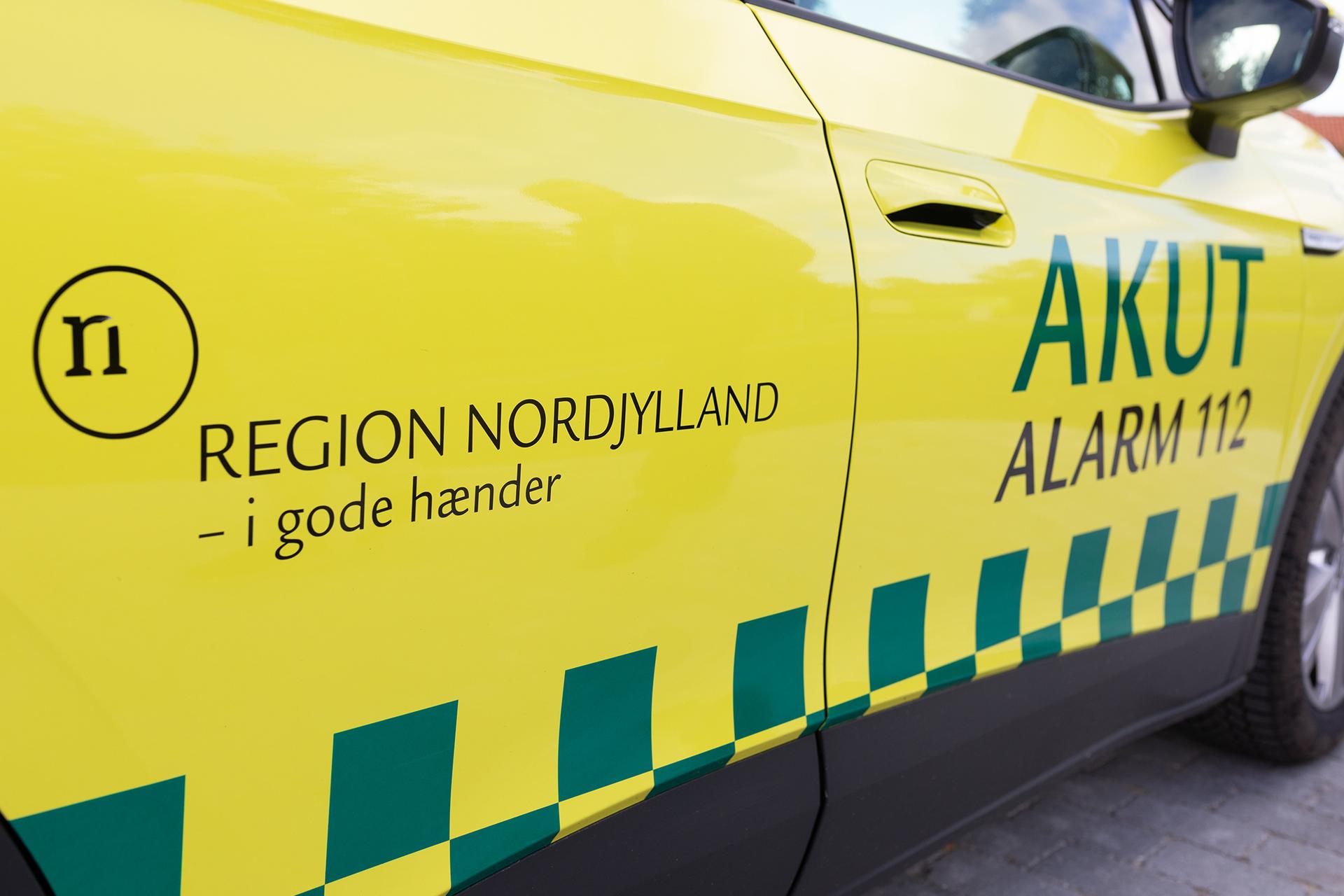
Photo: Lene Pedersen/North Denmark Region
Research at a glance: AI in Ambulances
This summary was generated by AI and approved by AAU Communication & Public Affairs.
Today, many patients are taken to hospital by ambulance even though they could have been treated elsewhere within the healthcare system. This places additional pressure on emergency departments and hospitals, which are already facing shortages of staff and hospital beds.
In collaboration with the North Denmark Region and Treat Systems ApS, researchers from Aalborg University have developed a prototype AI-based system that continuously assesses a patient's condition on the way to hospital.
The system is designed to help ambulance personnel identify more quickly which patients require urgent hospital treatment. It is intended to support, rather than replace, healthcare professionals’ clinical judgement.
Morten Breinholt Søvsø, Project Manager and Clinical Associate Professor at the Centre for Prehospital and Emergency Research at Aalborg University, explains:
“Today, patients are assessed by healthcare professionals using a scoring system based on factors such as pulse rate, blood pressure and other vital signs. However, the current scoring system is not particularly accurate in predicting which patients are at risk of deteriorating. As a result, some patients are taken to hospital even though a quick assessment by their general practitioner would be sufficient. Our system appears capable of almost halving the number of patients who are incorrectly classified as seriously ill.”
The current system requires healthcare professionals to initiate the patient assessment manually, and the assessment is often performed only once or twice. As a result, it provides only a snapshot of the patient’s condition, increasing the risk that any deterioration may not be detected in time.
“The key difference is that the new system assesses the patient’s condition automatically and continuously whenever new measurements become available,” says Morten Breinholt Søvsø.
He adds that the researchers have focused on ensuring that healthcare professionals can see which factors underlie a specific assessment:
“For example, if a patient’s respiratory rate is high, the system can show that this is contributing to a higher-risk assessment.”
At this stage, the system is a prototype trained using ambulance data from the North Denmark Region. The next steps will be to work towards CE marking and to test the system in ambulances, possibly through a randomised clinical trial.
According to the researchers behind the project, the system has significant potential because standardised systems are already used nationwide in pre-hospital emergency care. This could make the solution easier to scale if it proves effective.
The Emergency Medical Services (EMS), which includes the ambulance service in the North Denmark Region, also sees considerable potential in the project, particularly as a growing number of older patients and increasingly complex care needs place additional pressure on emergency services.
Martin Rostgaard-Knudsen, Chief Medical Officer of the Emergency Medical Services (EMS), explains:
“Time is critical in our work, so if AI can help our staff improve the quality of their patient assessments, it could ultimately enhance patient safety while also helping us ensure that patients receive the right treatment in the right place. We are always open to using new technologies and artificial intelligence as tools that can complement the work of our highly skilled healthcare professionals.”
Facts about ambulance call-outs
In December 2024, the Emergency Medical Services (EMS) in the North Denmark Region published an analysis stating that the region’s Emergency Medical Dispatch Centre handles approximately 47,000 emergency 1-1-2 calls each year concerning potentially life-threatening acute illnesses or accidents.
The analysis indicates that an increasing number of 1-1-2 calls are not related to acute or serious medical conditions.
According to the report, the number of 1-1-2 calls in the North Denmark Region increased by 27% between 2017 and 2023. There has also been a rise in the number of prehospital responses, particularly those initiated through 1-1-2 calls. These responses increased by 22% during the same period (2017-2023).
Contact
Morten Breinholt Søvsø
Project Manager and Clinical Associate Professor at the Centre for Prehospital and Emergency Research at Aalborg University
Phone: +45 2929 1980
Mail: morten.soevsoe@rn.dk
Martin Rostgaard-Knudsen
Chief Medical Officer of the Emergency Medical Services (EMS), the North Denmark Region
Phone: +45 4030 8816
Mail: marok@rn.dk
Mads Lause Mogensen
CEO, Treat Systems ApS
Mail: mm@treatsystems.com
Nina Hermansen
Journalist, AAU Communication & Public Affairs
Phone: +45 2294 0459
Mail: ninah@adm.aau.dk